Effective Date: 1 July 2023
Flexible Working Arrangements (FWA) are no longer merely an employee benefit—they are now part of Malaysia's employment law.
Since the Employment Act 1955 was amended with effect from 1 January 2023, employees have the statutory right to apply for flexible working arrangements. However, many employers are still unaware that these requests must be managed according to legal requirements rather than management discretion alone.
The release of the official Flexible Working Arrangements Guidelines by the Ministry of Human Resources (KESUMA) in December 2024, together with the latest tax incentives introduced by the Government in 2026, makes it timely for organisations to review their workplace policies.
Under Sections 60P and 60Q of the Employment Act 1955, employees may apply in writing to vary their
existing work arrangements.
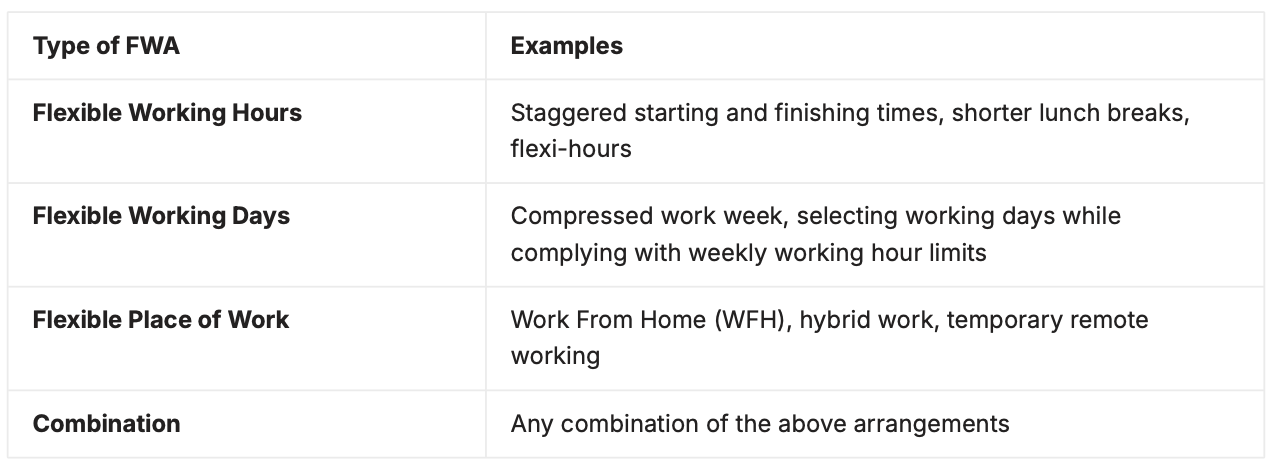
The arrangement may be implemented on a permanent, temporary, or rotational basis depending on business
requirements.
Important: FWA gives employees the right to apply, but not an automatic right to approval.
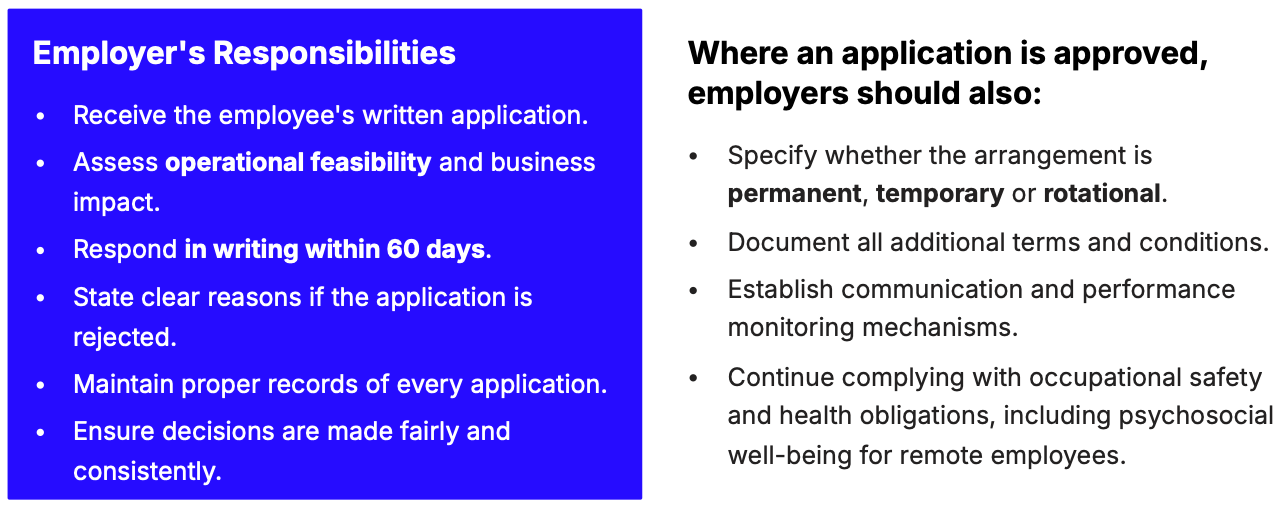
Employers may reject an application provided there are genuine business or operational reasons.
Once an application is received, employers should establish a structured assessment process.
Although the legislation appears straightforward, implementation can be more challenging.
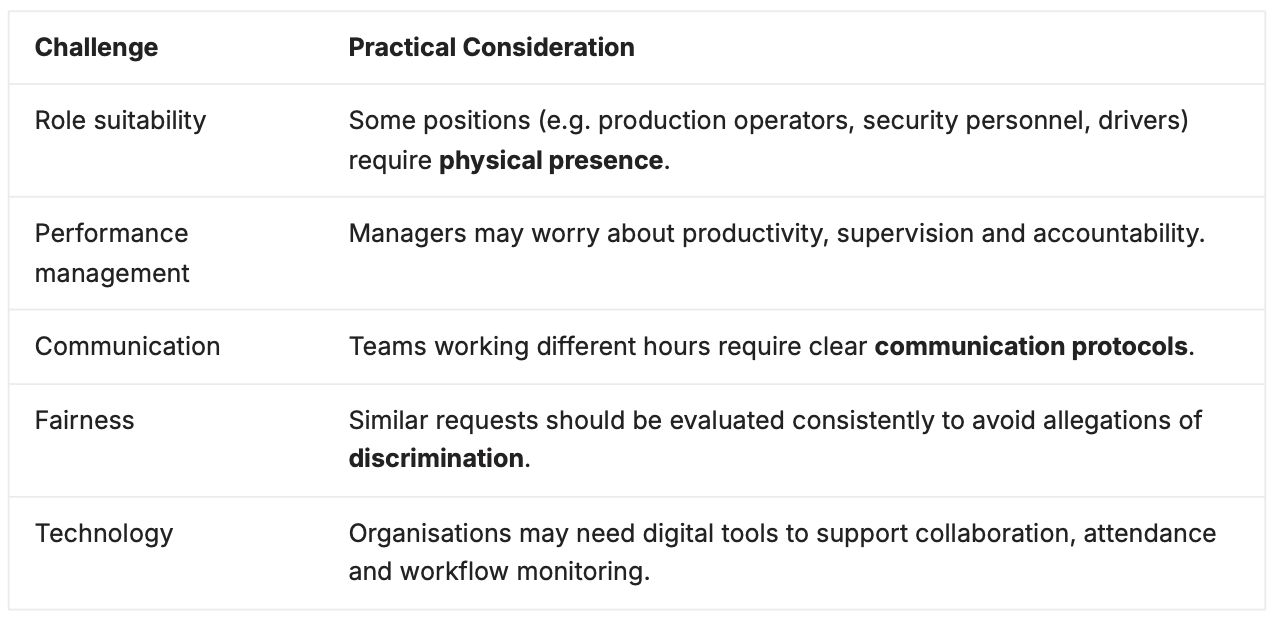
These challenges demonstrate why organisations should establish objective assessment criteria instead
of deciding each request on an ad hoc basis.

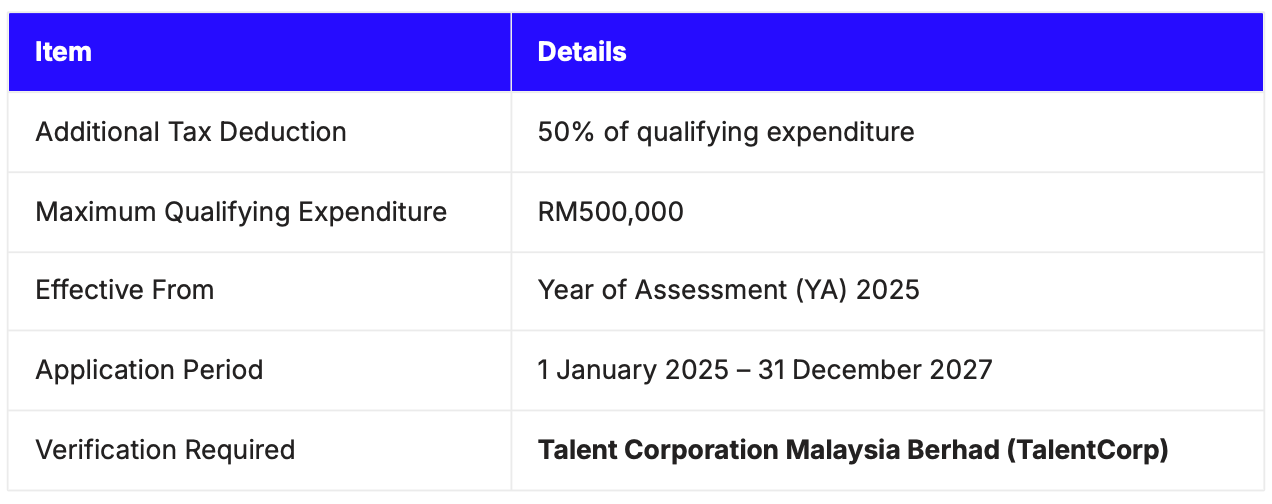
To encourage wider adoption of FWA, the Government introduced the Income Tax (Deduction for
the Costs of Implementation of Flexible Work Arrangements) Rules 2026 [P.U.(A) 225/2026].
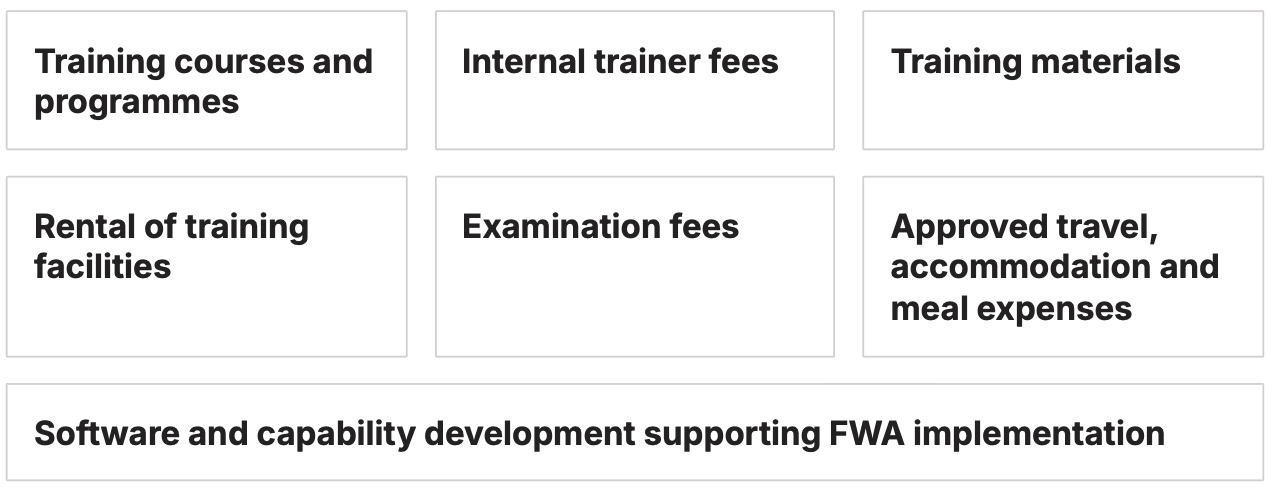
Examples of qualifying expenditure include:
The deduction is available only once and cannot be claimed together with the earlier FWA tax
incentive rules.

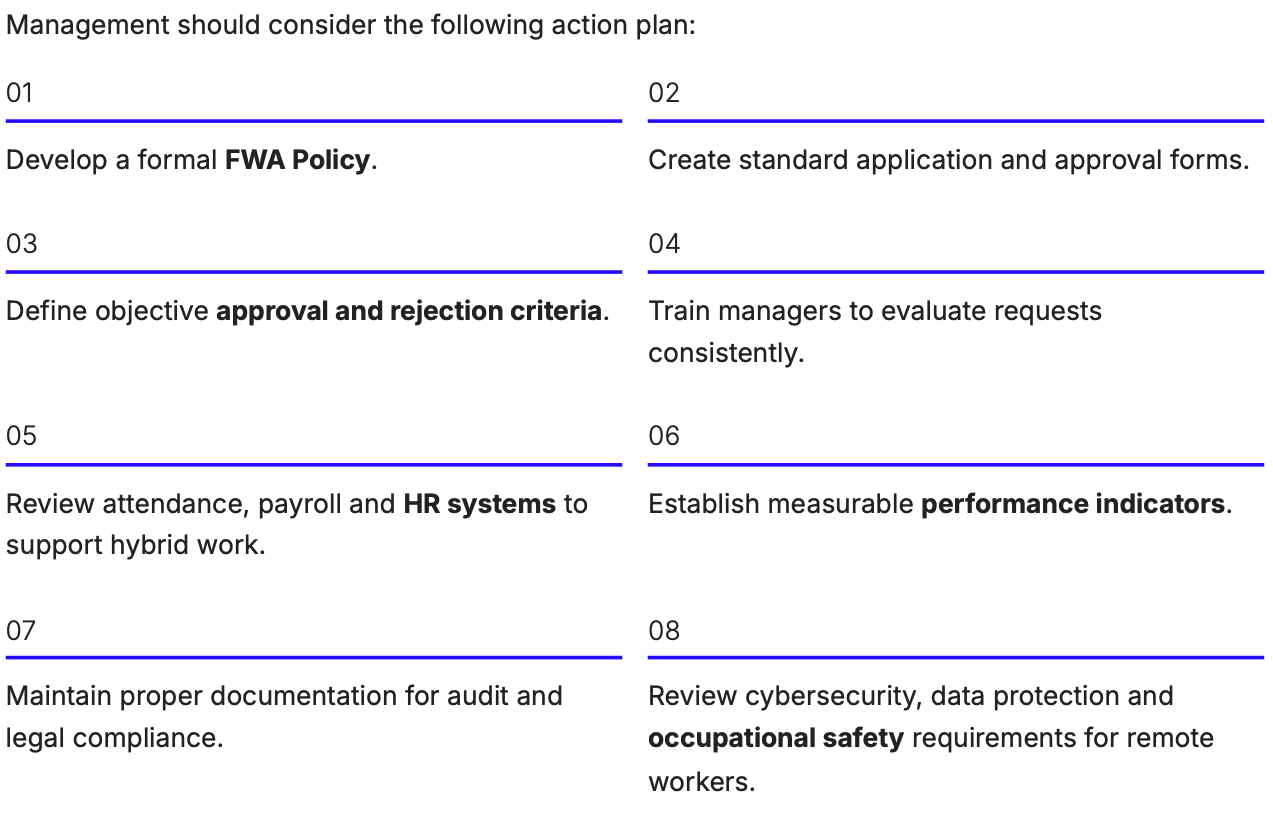
Flexible Working Arrangements are now part of Malaysia's employment landscape. Employers
who establish clear policies, objective assessment criteria and robust governance will be better
equipped to comply with the law, improve employee engagement and benefit from the
Government's tax incentives.