STSDS (Stamp Duty Self-Assessment System) is a new framework introduced by the Inland Revenue Board of Malaysia
("LHDN") that changes how stamp duty is managed and paid in Malaysia. Under STSDS:
• Stamp duty applies to both physical and electronic documents
• Businesses are required to self-assess stamp duty
• Employers must identify dutiable documents, calculate the duty payable, submit the return, and make payment
• All submissions and payments are made via MyTax, creating a full digital audit trail
This marks a major shift in responsibility from the tax authority to the business.
Previously, stamp duty followed a formal assessment model under the STAMPS system.
Under the old approach:
Old System (STAMPS)
• Documents were uploaded to STAMPS
• LHDN officers assessed the stamp duty
• Payment was made only after a Notice of Assessment
was issued
New System (STSDS)
• Businesses assess the stamp duty themselves
• Returns are submitted directly
• Payment is made without waiting for LHDN approval
• LHDN's role shifts to post-submission audits
The key change is clear: responsibility and risk now sit with the employer.
Under STSDS, LHDN focuses on the substance of the document, not its title. Documents commonly subject to stamp
duty include:
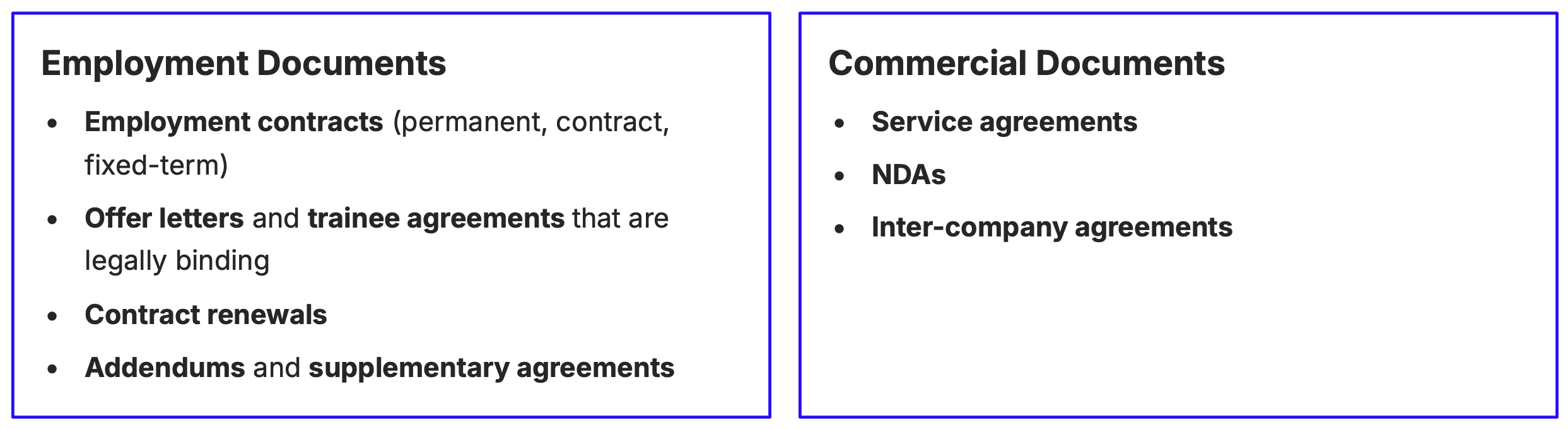
HR documents, for instance, once seen as administrative, now carry tax and legal exposure.
Empty space, drag to resize

The typical STSDS process involves:
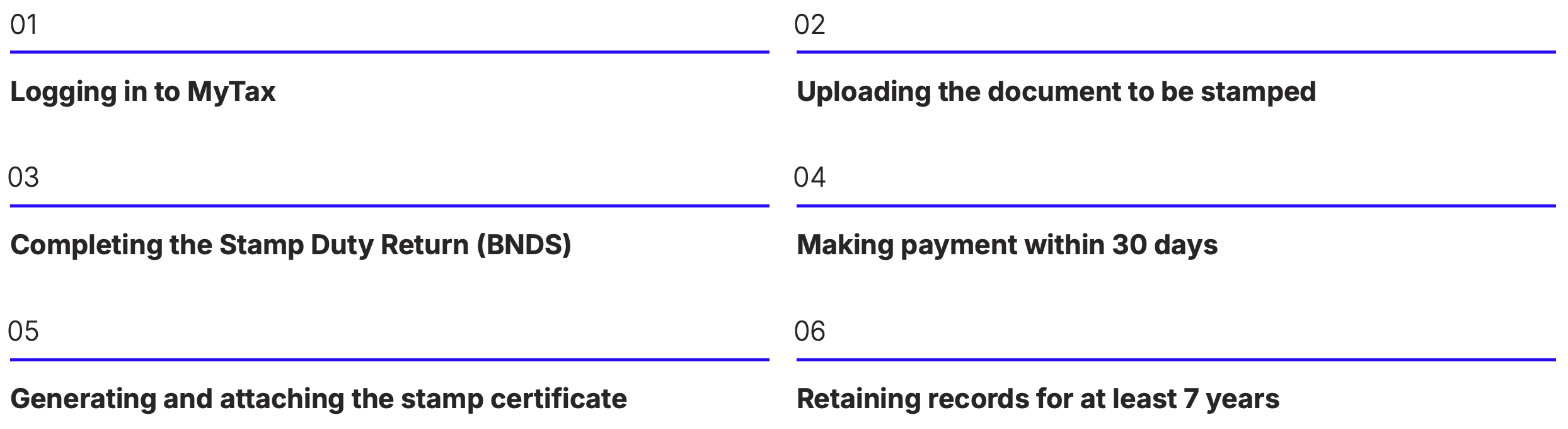
Proper documentation and record-keeping are critical for audit readiness.
To comply effectively under STSDS, businesses should:

Stamp duty compliance should no longer be treated as a last-minute administrative task.

Late stamping and under-stamping remain offences under the law. However, LHDN has announced that:
• A penalty-free period will apply during the first year of STSDS
• This relief is intended to help businesses adapt to the new system
• The relief applies only to genuine mistakes , not failure to stamp documents
Proper documentation and record-keeping are critical for audit readiness.

Key Takeaway
STSDS fundamentally changes how stamp duty is managed. From 1 January 2026, businesses must take ownership
of stamp duty compliance and treat it as a core compliance responsibility, not an afterthought.
Source: Lembaga Hasil Dalam Negeri Malaysia