Effective Date: January 2025 (Active Rollout)
Malaysia's Progressive Wage Policy (PWP) (Dasar Gaji Progresif) continues to gain traction as the Government's flagship initiative to promote sustainable wage growth, improve productivity and encourage structured career progression. Unlike the Minimum Wage Order, which is a statutory requirement, the PWP is a voluntary incentive programme that rewards eligible employers for increasing employee salaries while investing in workforce development.
The latest Parliamentary update (as at 5 June 2026) indicates encouraging progress. A total of 4,025 private-sector employers have implemented the policy, benefiting 51,363 employees, while the Government has disbursed over RM64.08 million in incentives.
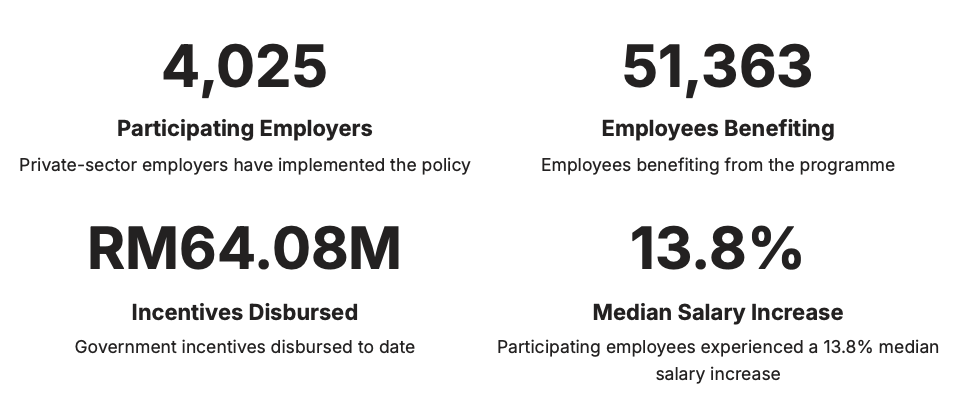
Median monthly wages rose from RM2,100 to RM2,390. Entry-level employees recorded even stronger wage growth of approximately 16%, increasing from RM1,900 to RM2,200. The programme is predominantly driven by SMEs, with small companies accounting for 50.2% of participating employers.
Sector participation is led by Wholesale & Retail Trade (26.7%), Manufacturing (15.7%), Professional, Scientific & Technical Activities (11.1%), Education (7.4%) and Accommodation & Food Services (6.9%), indicating broad applicability across industries.
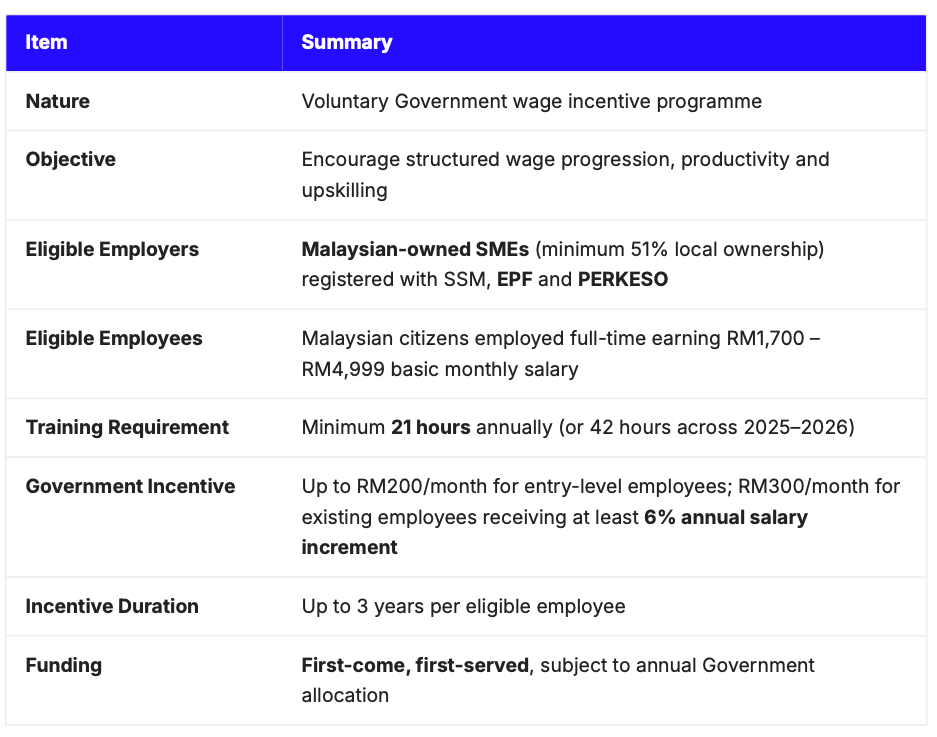
To participate, employers must:
- Be a private-sector Malaysian-owned SMEs with at least 51% Malaysian ownership.
- Be registered with SSM, EPF (KWSP) and PERKESO (SOCSO).
- Government-linked companies (GLCs), multinational corporations (MNCs), public sector organisations, defence and domestic employment are generally excluded.
Eligible employees must be Malaysian citizens employed full-time under a contract of service, earning a basic monthly salary between RM1,700 and RM4,999. Existing employees must receive at least a 6% annual salary increment to qualify for the higher incentive tier.
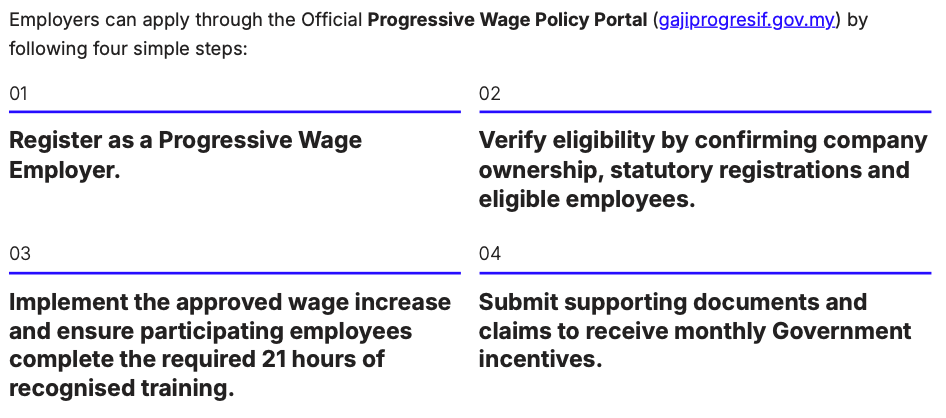
As funding is allocated on a first-come, first-served basis, organisations are encouraged to apply early to maximise the likelihood of approval.
A notable advantage for levy-paying employers is that HRD Corp claimable programmes may also satisfy the PWP's mandatory training requirement. This allows organisations to utilise existing levy funds to fulfil the required 21 hours of annual training, thereby improving employee competencies without incurring significant additional training costs.
The Progressive Wage Policy should be viewed as more than a wage subsidy. It enables organisations to strengthen employee retention, enhance employer branding, establish structured career pathways and improve workforce productivity while partially offsetting salary increments through Government incentives.
With only 4,025 employers participating nationwide, the programme remains relatively under-utilised, presenting an opportunity for eligible SMEs to secure funding before annual allocations are fully committed.
The Progressive Wage Policy offers eligible SMEs a practical opportunity to improve employee retention, productivity and wage competitiveness while leveraging Government incentives and HRD Corp funding to reduce the overall cost of workforce development.