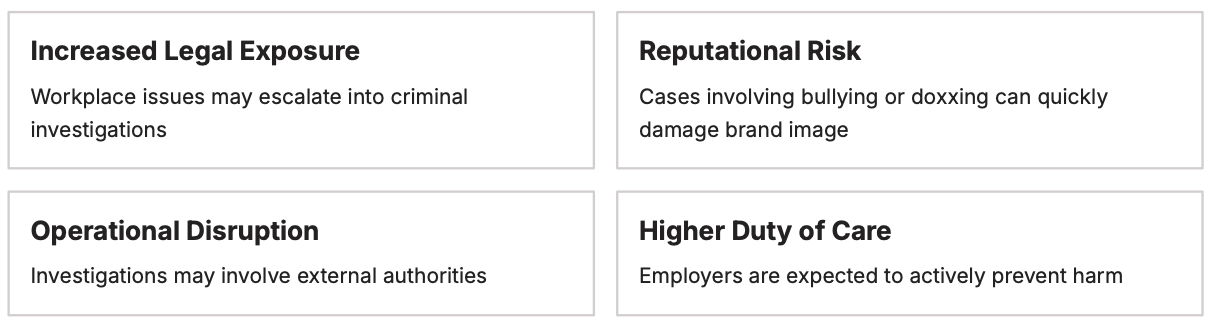
The Penal Code (Amendment) Act 2025 represents a significant shift in how workplace conduct is regulated in Malaysia. Traditionally, issues such as bullying, harassment, and workplace conflicts were handled internally by HR through disciplinary processes. This is no longer the case. The amendments — particularly Sections 507B–507G — now elevate such behaviours into criminal offences, exposing individuals (and indirectly, employers) to fines and imprisonment of up to three years or more in severe cases.
👉 Workplace misconduct is no longer just an HR issue — it is now a legal and criminal risk.

The revised Penal Code introduces broader and more modern definitions to reflect today's workplace realities, including:
- Workplace bullying and harassment (verbal, behavioural, or written)
- Psychological and emotional harm, even without physical injury
- Cyberbullying and digital misconduct (emails, WhatsApp, social media)
- Threatening, insulting, or abusive communication
- Doxxing — the act of sharing or publishing someone's personal information (e.g. IC, phone number, address) with intent to harass, intimidate, or cause fear
- Conduct that causes fear, alarm, or distress, even indirectly
Importantly, liability may arise even where there is no direct intention to harm. If a person "ought to know"
their actions would likely cause distress, they may still be held responsible.
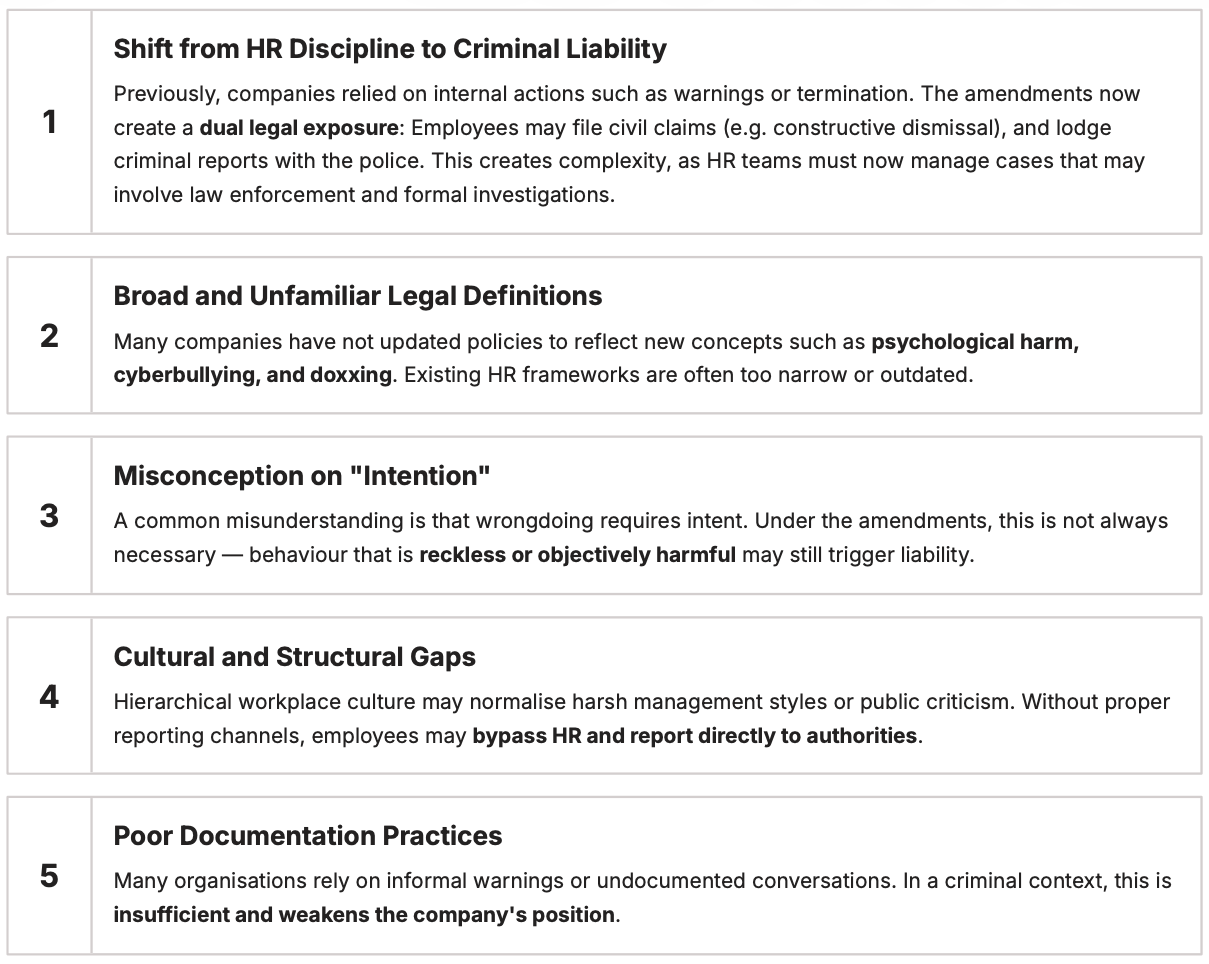
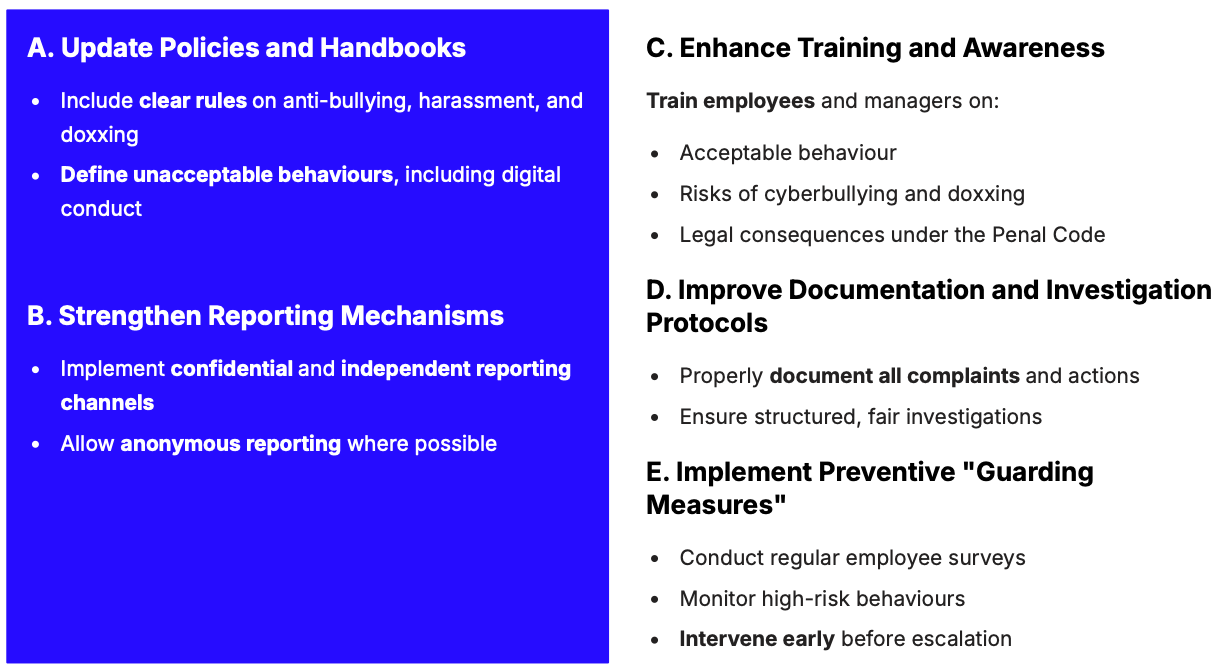
Despite the significance of these changes, many organisations remain unprepared. Key reasons include:

Key Takeaway
The Penal Code (Amendment) 2025 makes workplace bullying, harassment, and doxxing criminal offences. Companies must act early to ensure compliance and manage risks effectively.