Effective Date: 1 June 2026
HIRARC—Hazard Identification, Risk Assessment and Risk Control—provides a structured approach to preventing workplace injuries and ill health. Management should treat it as an operating discipline: understand how people could be harmed, prioritise exposure and fund effective controls.
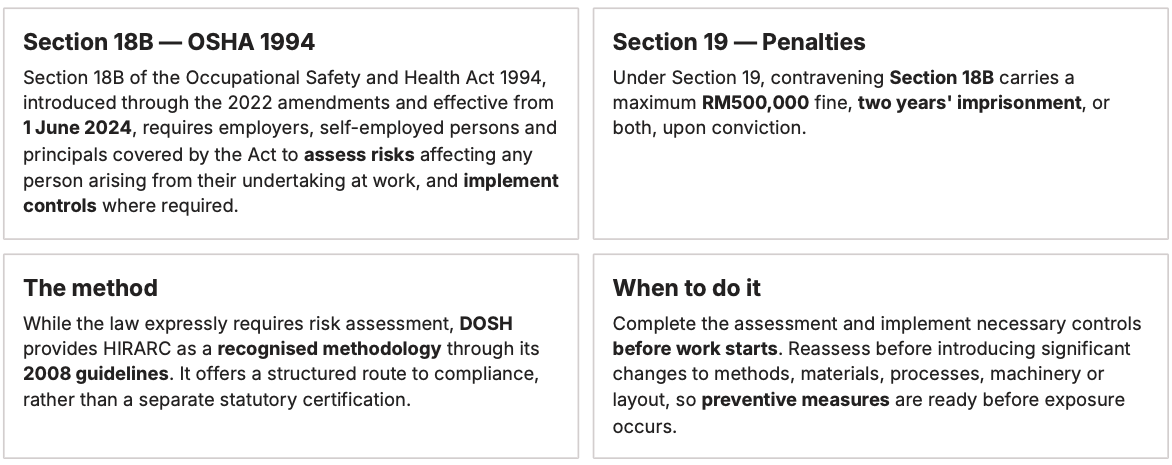
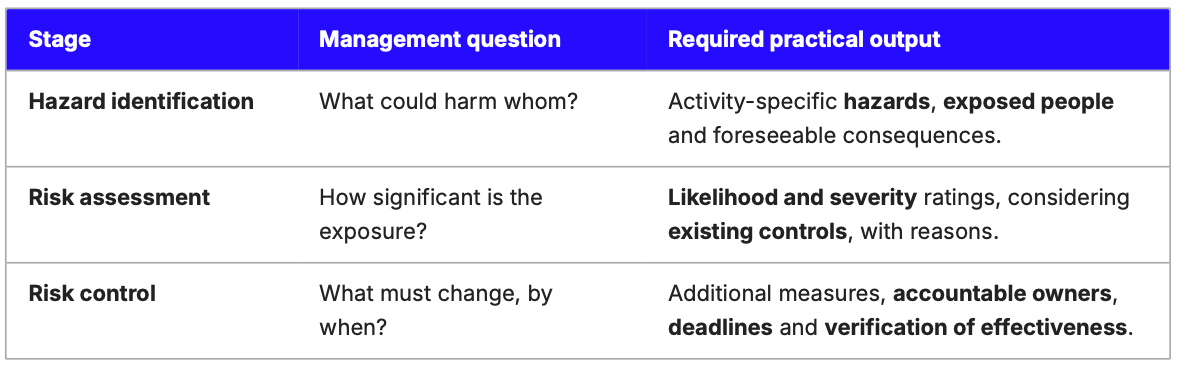
Cover routine operations, maintenance, deliveries, emergencies and contractor activities. Consider customers and visitors alongside employees. Examine physical, chemical, biological, ergonomic and psychosocial exposures where relevant; an office-based operation still has meaningful risks.
Use supervisors and employees who understand the actual work. Walk the premises, observe tasks and examine incident records. Generic templates can support consistency, but each location needs findings reflecting its conditions.
The DOSH example uses Likelihood × Severity, each rated 1–5. Likelihood considers how probable the harmful event is; severity considers its credible consequences. Scores guide priorities rather than predict exact accident probabilities.
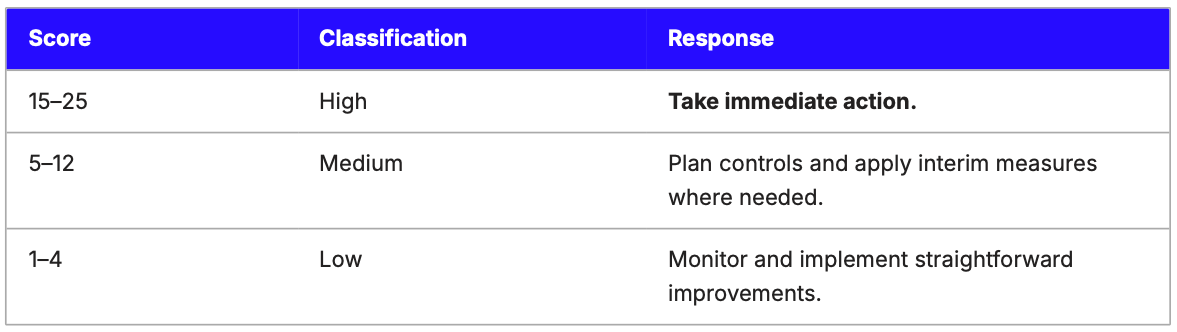
Apply the selected scales consistently. Prefer eliminating the hazard, followed by substitution, engineering controls, administrative measures and personal protective equipment. Training and warning signs alone may leave substantial exposure.
An employee retrieves shoe cartons from high shelving using an unstable stool. A fall could cause a serious fracture. Assume existing controls are inadequate: likelihood 4 × severity 3 gives 12, classified as medium under the DOSH example.
Management should relocate frequently accessed stock to reachable levels, provide suitable access equipment and prohibit improvised climbing. The store manager owns implementation before further unsafe retrieval. Reassess the remaining risk only after controls are installed and observed working; a lower forecast score does not prove completion. These ratings are illustrative and require site validation.

Sources: OSHA 1994, ss 18B and 19; DOSH Guidelines for HIRARC 2008; DOSH OSHMS Guidelines 2011