The Gig Workers Act 2025 (Act 872), recently came into enforcement, introduces a structured legal framework for non-traditional work arrangements in Malaysia. While gig workers are not classified as employees, businesses engaging them now carry clearer responsibilities and potential liabilities.
Gig workers are individuals engaged under a "contract for services" — typically task-based, flexible, and without employee benefits.
They are not limited to ride-hailing or delivery riders such as Grab . The definition is broader and includes:
- Freelancers (designers, IT developers, consultants)
- Delivery runners / dispatch personnel
- Part-timers engaged per task (event crew, promoters, admin support)
- Service providers (photographers, make-up artists, technicians)
The key distinction is whether the individual is treated as an employee (contract of service) or an independent service provider. If there are no statutory benefits such as EPF, leave, or structured employment terms, they are likely within the
scope of the Act.

In a weaker economic environment, more companies are adopting
lean and flexible workforce models. Engaging gig
workers helps manage cost and scalability, and this trend is expected to grow.However, this shift also increases compliance exposure. Many businesses assume that without an employment relationship, obligations are minimal — this is no longer accurate.
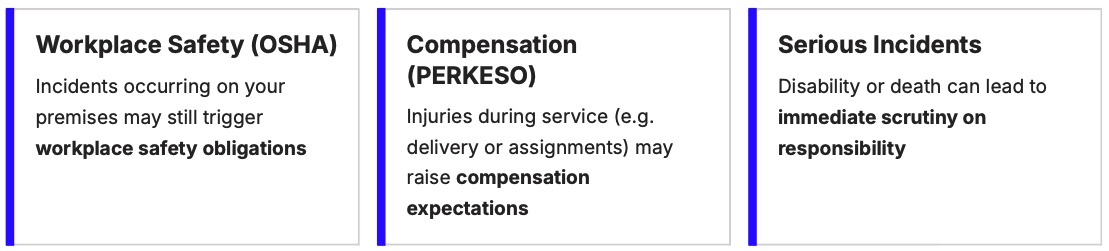
With e-Invoicing and digital documentation, working relationships are now easier to trace. Informal or undocumented arrangements can increase legal exposure.
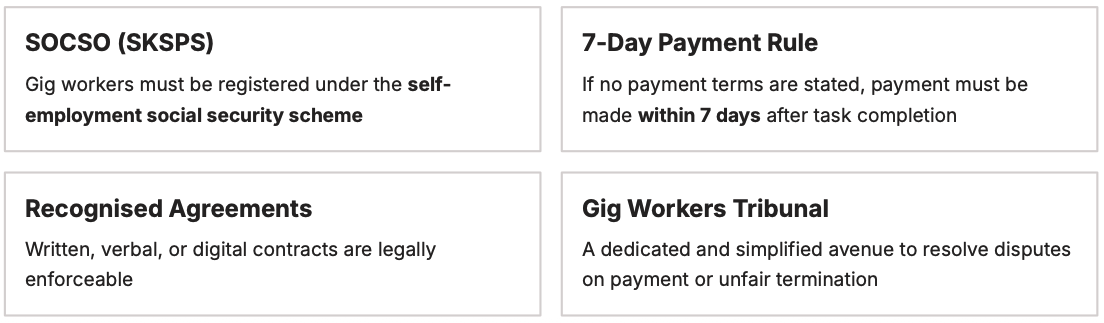
The Act introduces several important requirements:
The Act places stronger responsibility on contracting entities to ensure gig workers' safety. Businesses are expected to:
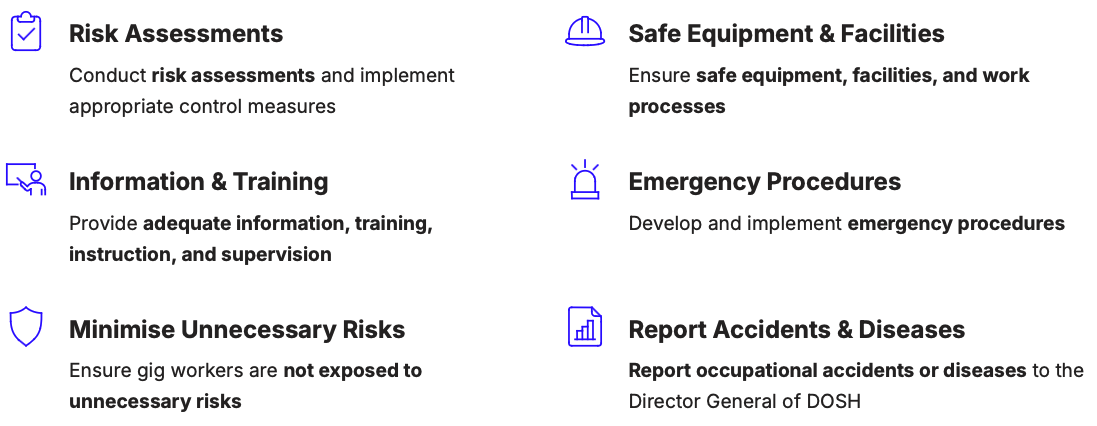
This significantly raises expectations — gig workers can no longer be treated as fully independent from a safety
standpoint.
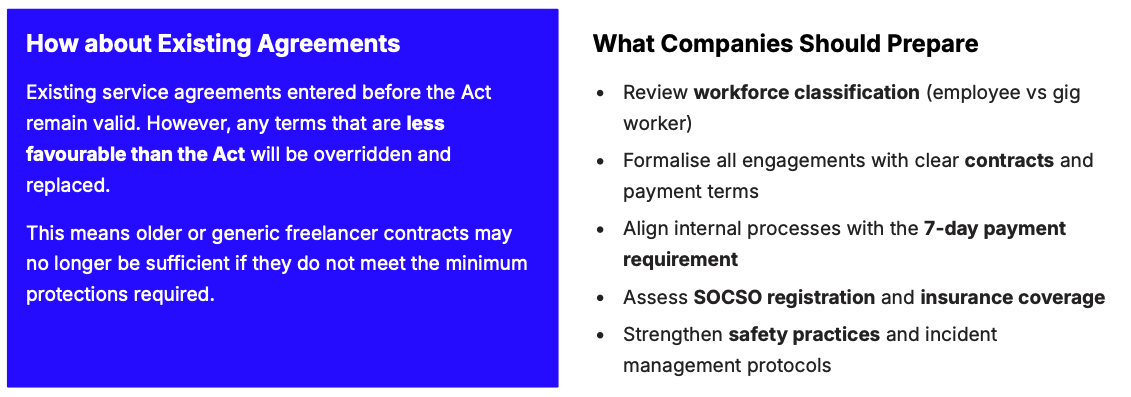
Key Takeaway
As businesses increasingly rely on gig workers, regulatory expectations are tightening. Proper structuring, documentation, and safety oversight are now essential to manage risk and ensure compliance.