Section 17A of the Malaysian Anti-Corruption Commission Act 2009 introduces corporate liability for corruption in Malaysia. A company can be held legally liable if corruption is committed for its benefit — applies regardless of whether top management had direct involvement. Focus shifts from individual wrongdoing to organisational accountability.
Key Principle: If an "associated person" commits bribery, the company is deemed guilty.

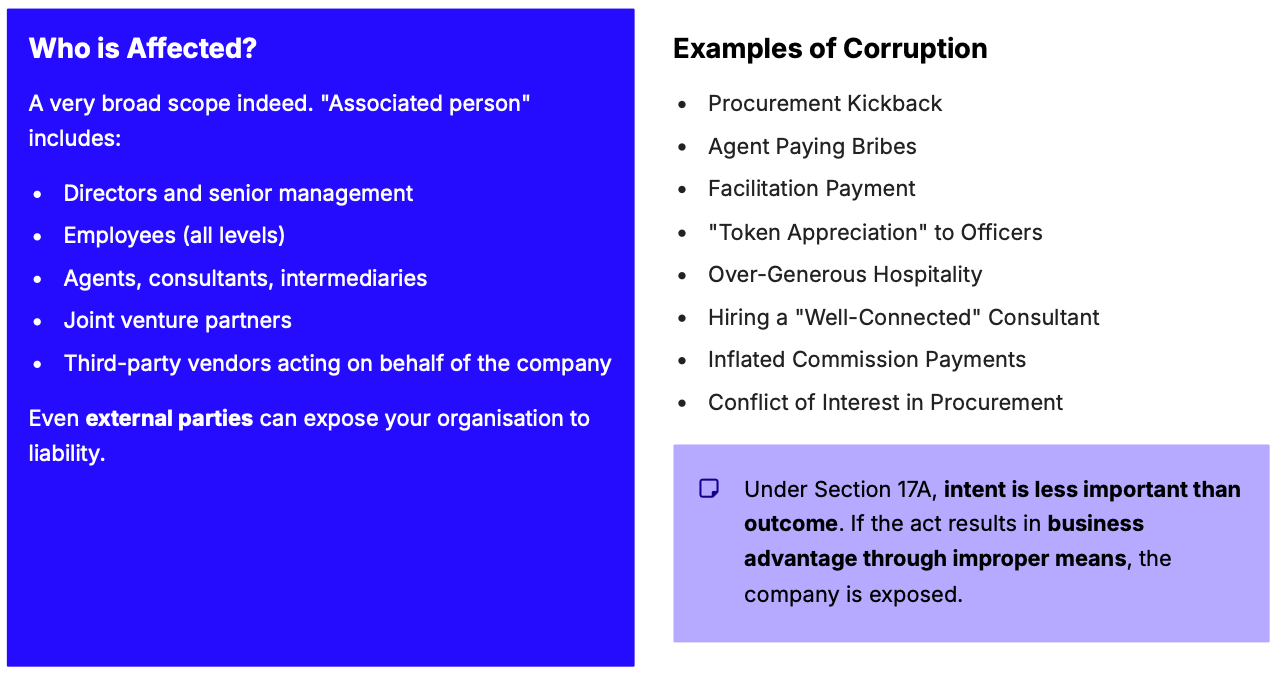
Section 17A has significantly changed the risk landscape:
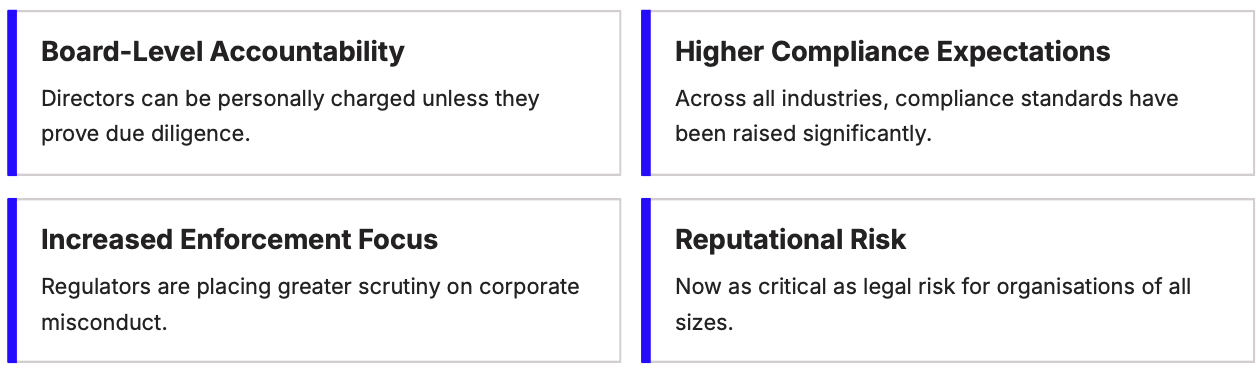
Penalties: Fines of at least 10× the bribe or RM1 million, imprisonment up to 20 years, with directors and management potentially personally liable for corporate corruption offences.
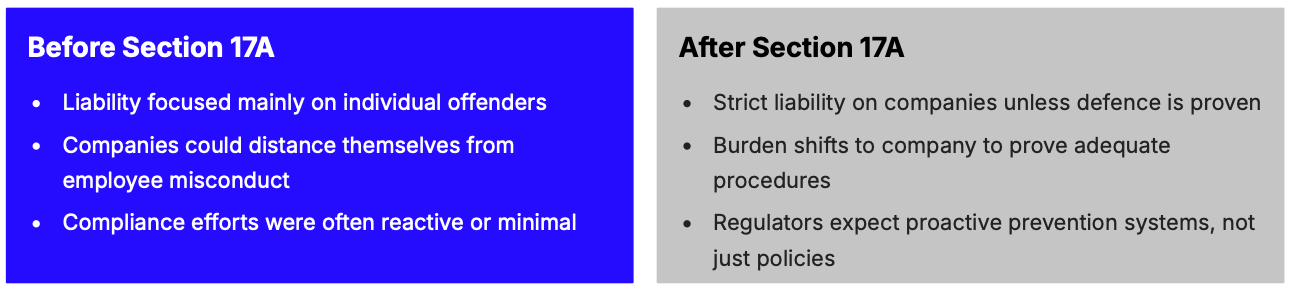
This marks a fundamental shift from "detect & punish" → "prevent & govern"
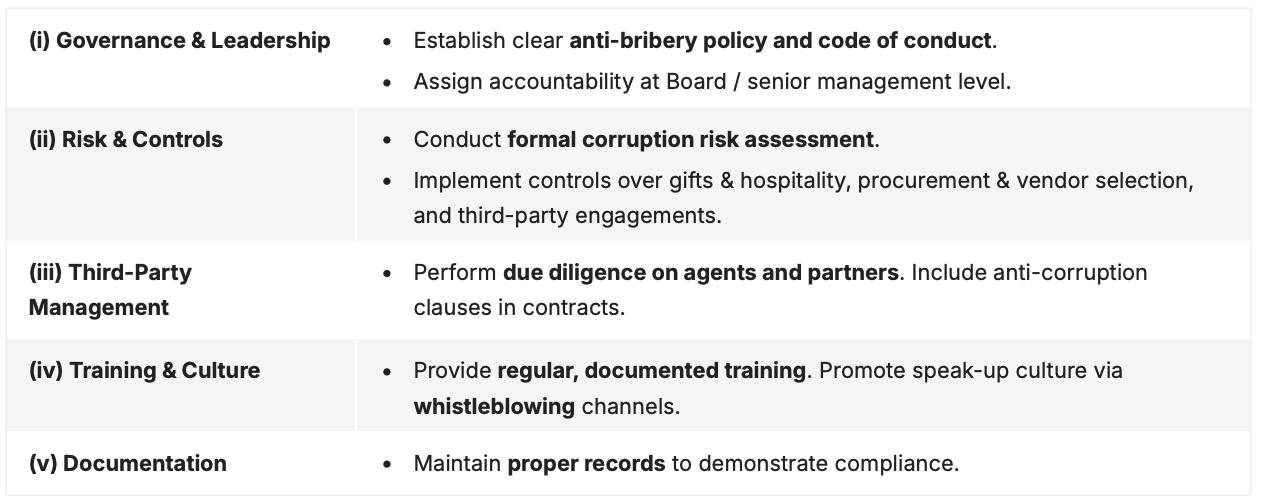
A company can avoid liability only if it proves it had adequate procedures in place. Guided by the Government's T.R.U.S.T framework:
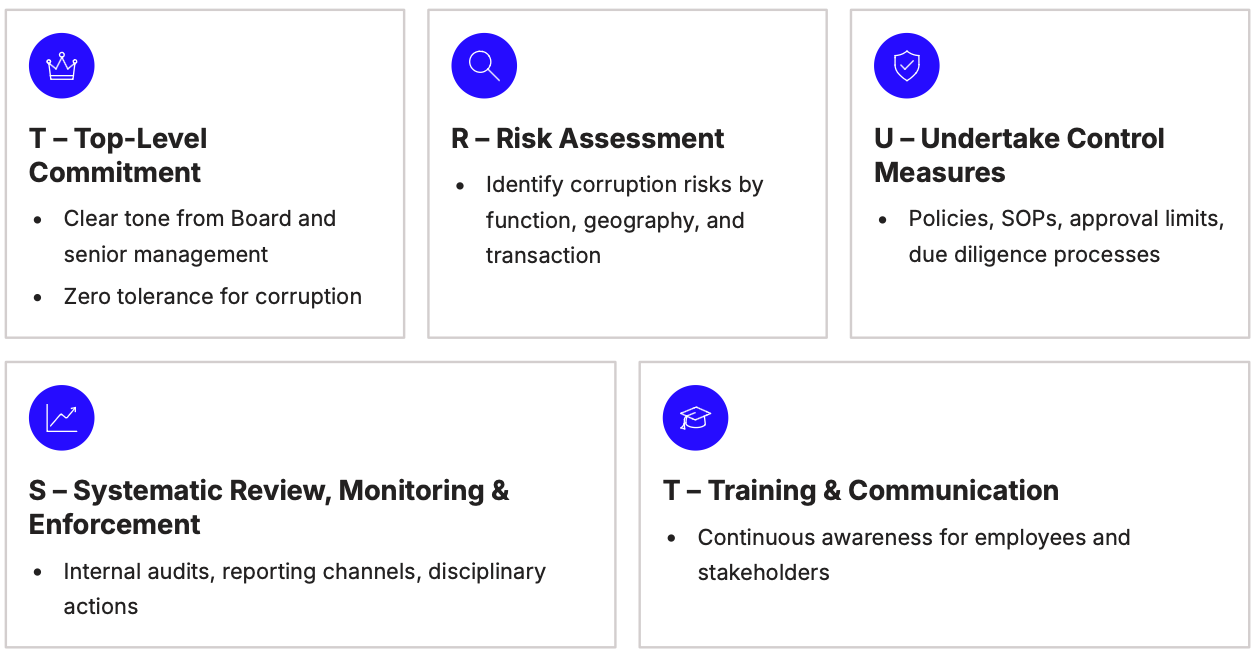
Top management should ensure the following are in place:
Key Takeaway
Companies are strictly liable for corruption unless adequate procedures exist.Bottom Line: Companies must move from passive compliance → active prevention and governance.