On 5 January 2026, the Government announced a major compliance relief for Phase IV e-Invoice taxpayers, which
mainly consist of SMEs / PMKS.
The announcement introduces a 12-month transition period, extended from the original 6 months, together with several
practical relaxations aimed at reducing compliance pressure on smaller businesses that are not yet system-ready.
This transition year is intended to help SMEs prepare for full mandatory e-Invoicing starting 1 January 2027.
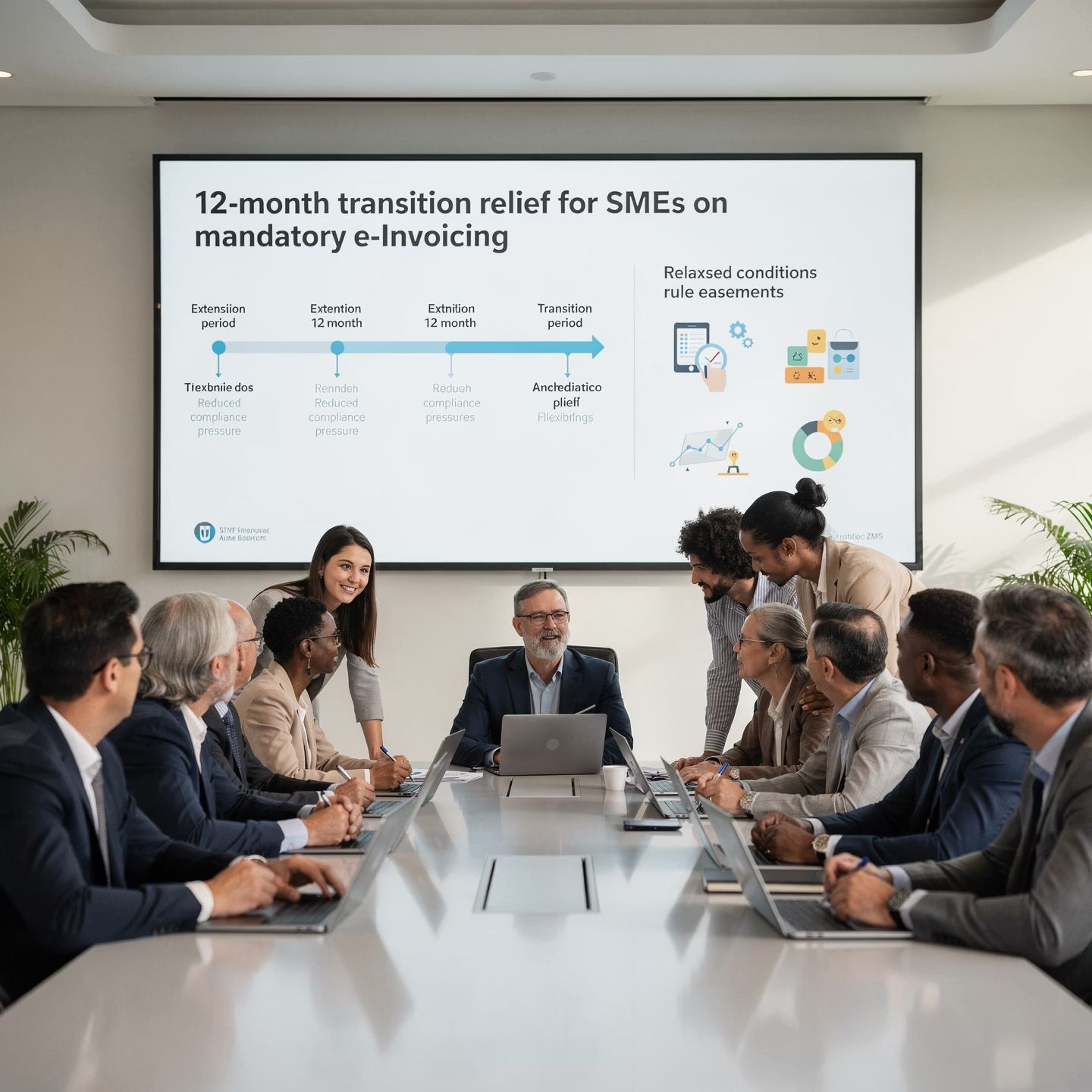
Phase IV taxpayers are given a 12-month transition period:
New transition period: 1 January 2026 – 31 December 2026
Previously: Only 6 months
This extension provides significant relief to SMEs that:
Are still using manual or basic accounting systems
Require more time to upgrade software
Need staff training and internal process adjustments
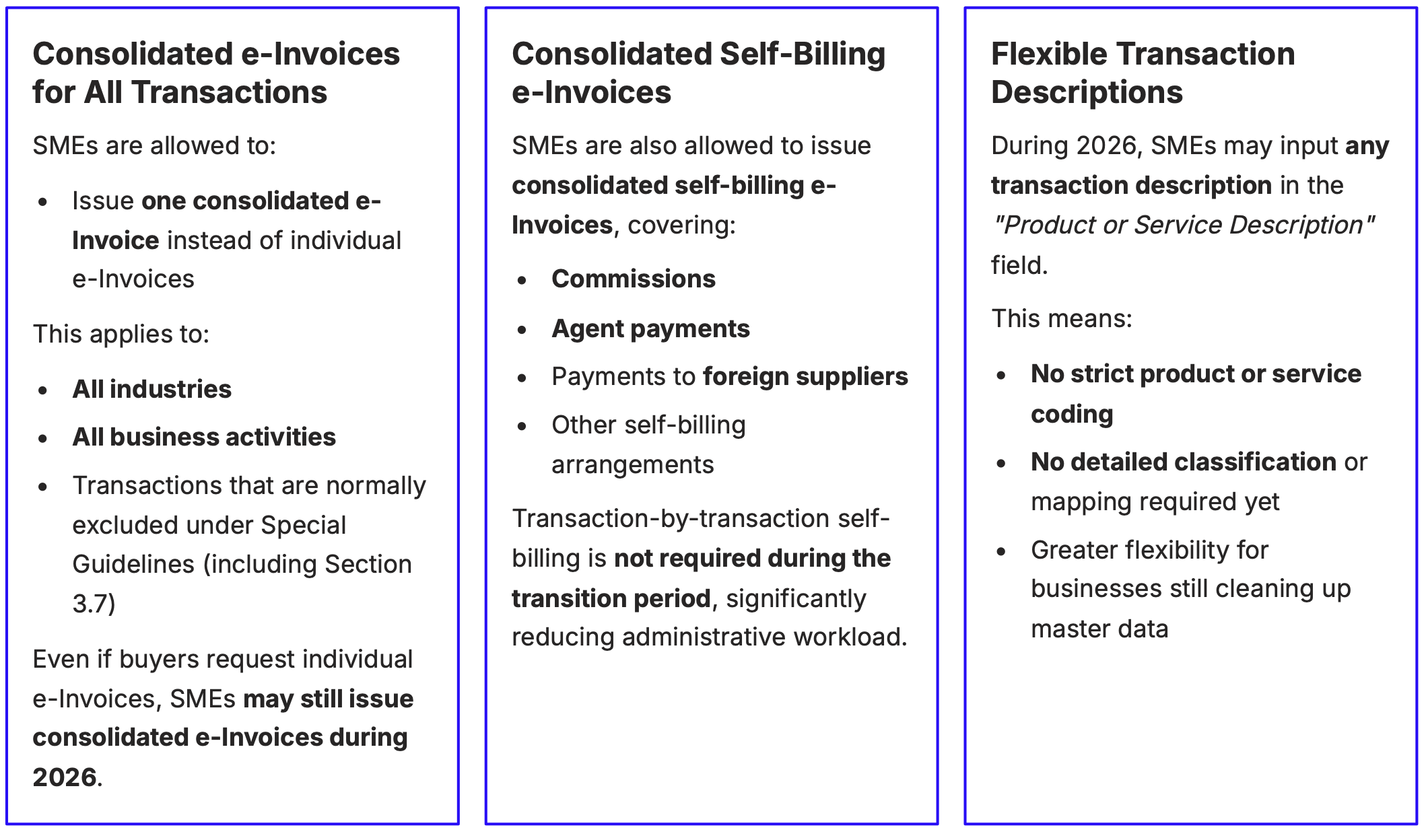
No Penalties – With Conditions
During the 2026 transition year, no
penalties will be imposed for e-Invoice
non-compliance only if specific conditions
are met.
SMEs must:
- Issue consolidated e-Invoices,
- and
Follow the relaxation rules issued by
LHDN
Failure to comply with the relaxed rules
may still expose businesses to
enforcement action.

Special Relief for the Building Materials Sector
From 1 January 2026, wholesale and retail businesses dealing in building materials receive additional relief.
• Consolidated e-Invoices are allowed
• e-Invoices are only required if:
- Transaction value exceeds RM10,000, or
- The buyer specifically requests an e-Invoice
This directly benefits:
1. Hardware shops
2.
Construction material traders
3.
Cash-based, high-volume retailers
Positive Impacts
More time to upgrade accounting systems
Time to train staff and improve internal controls
Lower compliance stress during 2026
Reduced administrative and invoicing costs
Avoidance of penalties if conditions are followed
Risks and Misunderstandings to
Avoid• "No penalty" does not mean "no compliance"
• 2026 is not optional — it is a transition year
• Full compliance is still mandatory from 1 January
2027
KEY TAKEAWAY
The 2026 transition period offers valuable breathing space for SMEs, but it must be used wisely. Businesses should
treat 2026 as a preparation year, not a postponement, to avoid compliance risks when full enforcement begins in
2027.