Audit exemption allows eligible private companies to be exempted from appointing an auditor and conducting a statutory audit for a financial year under Section 267(2) of the Companies Act 2016. The exemption is intended to reduce compliance costs and regulatory burden, particularly for micro, small, and medium-sized enterprises (SMEs), while still maintaining accountability through proper financial reporting to SSM. Importantly, audit exemption does not mean exemption from preparing or lodging financial statements.

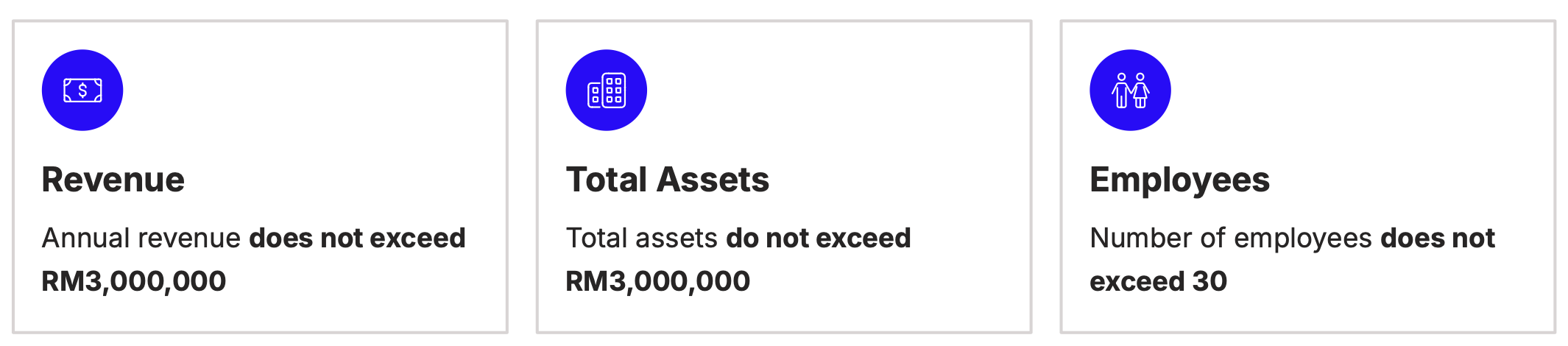
Under Practice Directive 10/2024, a private company qualifies for audit exemption if it meets any two (2) out of the following three criteria for the current financial year and the immediate past two financial years:
To ease transition, SSM has introduced a phased implementation over three years:

Dormant companies continue to qualify automatically under the exemption framework.
Audit exemption does not apply to:
• Public companies (including listed companies)
• Subsidiaries of public companies
• Foreign companies
• Exempt private companies that choose to lodge an EPC certificate instead of financial statements
Additionally, certain regulators, lenders, grant providers, or licensing authorities may still require audited financial statements, regardless of SSM exemption.

There is no application process for audit exemption. A company simply assesses its eligibility and elects not to appoint an auditor if the criteria are met. However, the company must still:
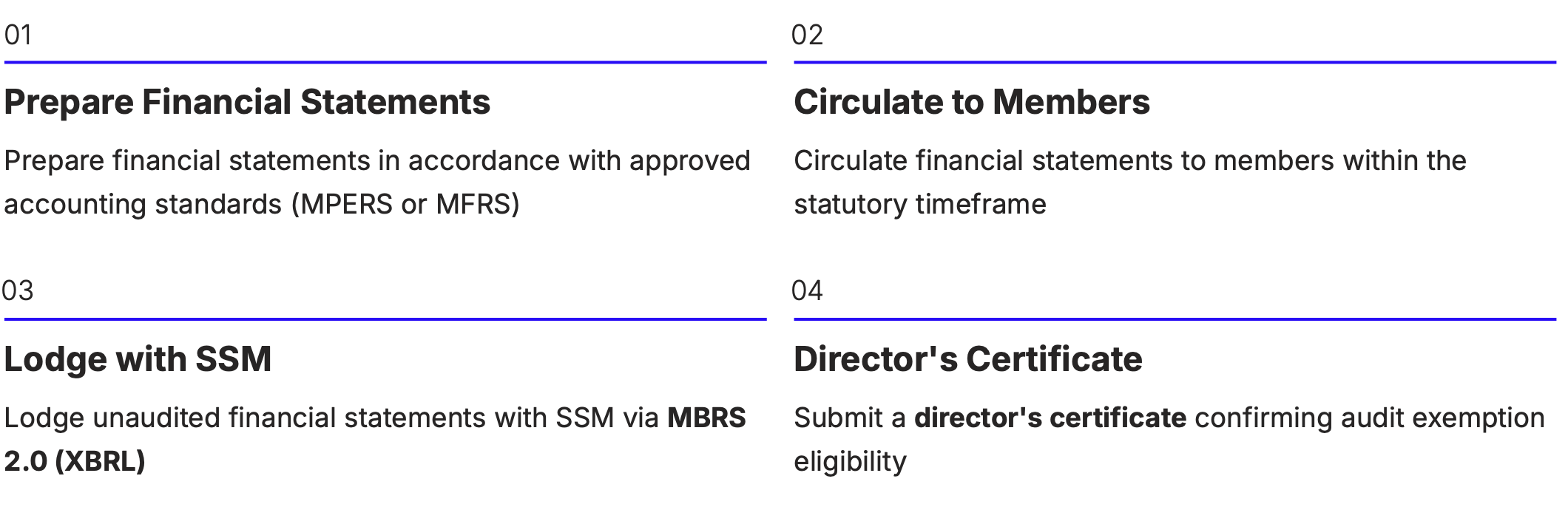
Records must be kept properly, and eligibility must be reassessed every year.
Important Notes
Penalties under the framework apply per transaction, not per year.
• Losing eligibility in a future year means audit exemption ceases prospectively, but remains valid for past qualifying years
• Members holding 5% or more voting rights may require the company to conduct an audit
• The Registrar may also direct a company to audit its accounts
• Directors remain fully responsible for the accuracy and truthfulness of financial statements
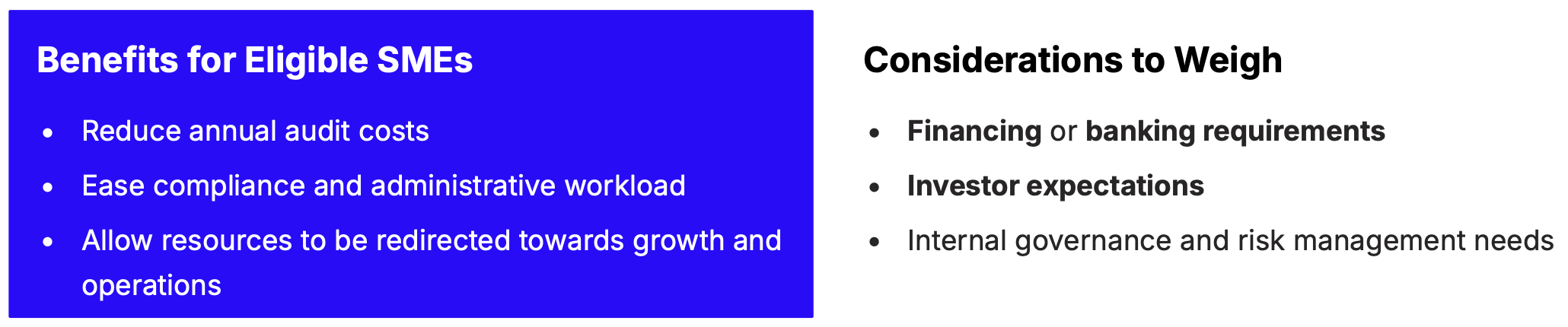
Many companies may still choose to continue audits voluntarily for credibility or commercial reasons.
Key Takeaway
The new audit exemption framework is a significant opportunity for private companies, especially SMEs, to reduce compliance costs. However, exemption comes with ongoing responsibilities, and directors must ensure strong
financial discipline, proper records, and annual eligibility assessments.
Businesses that treat E-Invoicing as merely a technical exercise risk significant financial and legal exposure under this new regime.
Source: Companies Commission of Malaysia (SSM)